INDBInternet News Database 2.5 Updated just now · 393 sources Show or hide images Light or dark

Results for “Scientist Finds New Solution”

Business
1 source

Who is covering this

NewsCenter
Truth score 38
Centre 100%100%
NewsCenter

What Is Five-Dimensional Black Saturn Spacetime? Scientist Finds New Solution to Albert Einstein's Equations

What Is Five-Dimensional Black Saturn Spacetime? Scientist Finds New Solution to Albert Einstein's Equations Jagran Josh Physicist Finds a Strange New Solution to Einstein's Equations in Five-Dimensional Spacetime: Black Saturn...

Lean: Center Fact-focusedFactuality: Mostly factualCountry: IndiaFunding: CorporateOwner: Independent
Full coverage
Coverage breakdown
Funding
Corporate100%
Countries
India100%
Media ownership
Independent100%
Avg reliability65
Low-credibility share0%
Fact / opinion1/0
State media0%
More analysis
Truth score: 38 (Weakly supported) Propaganda risk: 0 Trending: Low Sources: 1 Reliability: 65 Bias severity: 0 Risk: 0Sentiment: 0Sensationalism: 0 Amplification: 0

How we score

Like
Left 25%25%Centre 50%50%Right 25%25%
The Globe and MailCenter

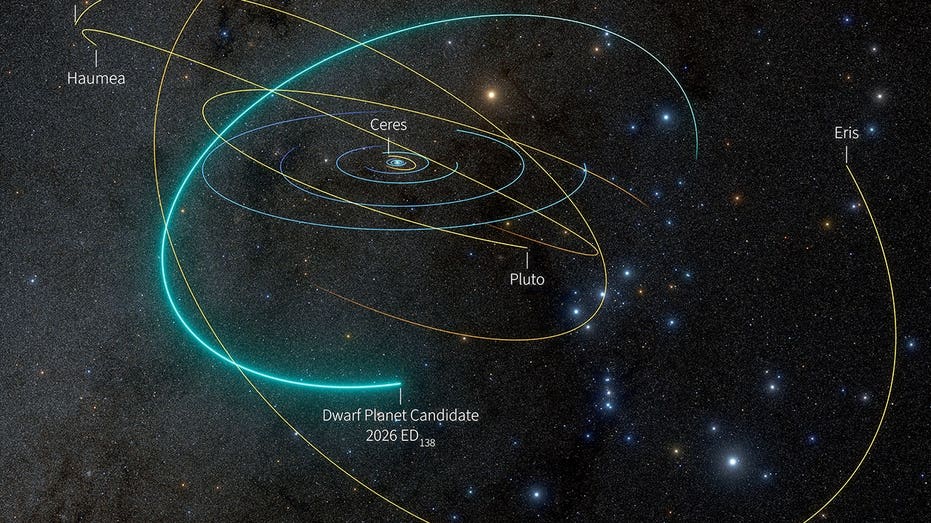
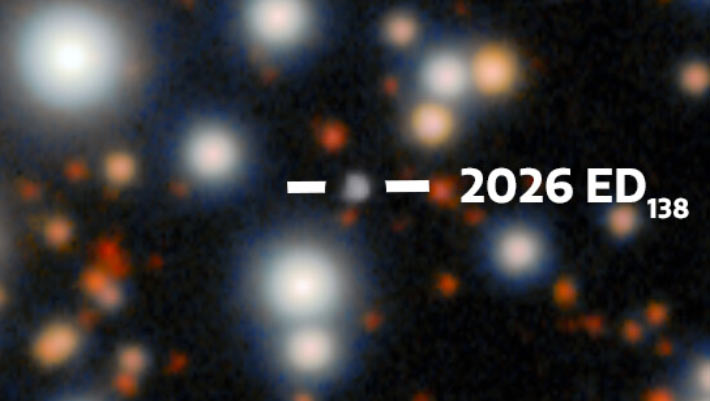
Telescope spots possible new dwarf planet orbiting beyond Pluto

Lying beyond Pluto, 2026 ED138 could be as large as 1,500 kilometers in diameter. The Vera C. Covered by 9 outlets: 2 lean left, 4 are centre, 1 lean right, 2 are not rated.

Lean: Center Fact-focusedFactuality: HighCountry: CanadaFunding: CorporateOwner: Woodbridge Company
+ 7 · Full coverage
Coverage breakdown
Funding
Corporate82%
State-funded9%
Not recorded9%
Countries
United States82%
Canada9%
Russia9%
Media ownership
Independent27%
Woodbridge Company9%
Condé Nast9%
Russian Government9%
Future US9%
Avg reliability67
Low-credibility share12%
Fact / opinion12/0
State media9%
More analysis
Truth score: 81 (Strongly corroborated) Propaganda risk: 0 Trending: Low Sources: 11 Reliability: 67 Bias severity: 0 Risk: 12Sentiment: -8Sensationalism: 2 Amplification: 0

How we score

Like
Science
1 source

Who is covering this

Google NewsCenter
Truth score 41
Centre 100%100%
Google NewsCenter

Scientists discover a surprising brain benefit of eating peanuts every day

Scientists discover a surprising brain benefit of eating peanuts every day Science Daily Popular snack may protect the aging brain when eaten every day: study New York Post Daily Peanut Intake Minute Mirror New Research Finds Daily...

Lean: Center Fact-focusedFactuality: HighCountry: United StatesFunding: Corporate
+ 1 · Full coverage
Coverage breakdown
Funding
Corporate100%
Countries
United States100%
Media ownership
Google News100%
Avg reliability75
Low-credibility share0%
Fact / opinion2/0
State media0%
More analysis
Truth score: 41 (Limited corroboration) Propaganda risk: 0 Trending: Low Sources: 1 Reliability: 75 Bias severity: 0 Risk: 0Sentiment: 0Sensationalism: 0 Amplification: 0

How we score

Like
Left 33%33%Centre 67%67%
The GuardianLeft

Is One Nation losing steam in Victoria? New poll points to possible shift as election nears

Exclusive: Internal polling by Greens shows progressives ahead of Hanson’s party, as Sandell and Pickering to join Wilson and Carroll at leaders’ debate Get our daily political email , free app or daily news podcast Two things happened...

Lean: Left Fact-focusedFactuality: Very highCountry: United KingdomFunding: Nonprofit trustOwner: Scott Trust
+ 61 · Full coverage
Coverage breakdown
Funding
Corporate67%
Nonprofit trust33%
Countries
United Kingdom33%
Australia33%
India33%
Media ownership
Scott Trust33%
Independent33%
HT Media33%
Avg reliability74
Low-credibility share0%
Fact / opinion64/0
State media0%
More analysis
Truth score: 62 (Corroborated) Propaganda risk: 0 Trending: Low Sources: 3 Reliability: 74 Bias severity: 0 Risk: 0Sentiment: -23Sensationalism: 1 Amplification: 0

How we score

Like
Science
1 source

Who is covering this

The HinduLeans left
Truth score 43
Left 100%100%
The HinduLeans left

Indian scientists find new gateway in plants’ alarm system

Insect pests cause roughly 20% of global annual crop losses, a figure projected to rise with warming, and crop protection still leans heavily on chemical insecticides. Learning how plants sense attack could point to crops that defend...

Lean: Leans left Fact-focusedFactuality: HighCountry: IndiaFunding: PrivateOwner: The Hindu Group
Full coverage
Coverage breakdown
Funding
Private100%
Countries
India100%
Media ownership
The Hindu Group100%
Avg reliability80
Low-credibility share0%
Fact / opinion1/0
State media0%
More analysis
Truth score: 43 (Limited corroboration) Propaganda risk: 0 Trending: Low Sources: 1 Reliability: 80 Bias severity: 0 Risk: 0Sentiment: -100Sensationalism: 0 Amplification: 0

How we score

Like
Business
1 source

Who is covering this

NewsCenter
Truth score 38
Centre 100%100%
NewsCenter

What would Earth without life be like? US scientists create a simulation to find out

What would Earth without life be like? US scientists create a simulation to find out ThePrint Scientists Simulated What Earth Would Be Like if Life Never Existed ScienceAlert A Virtual Lifeless Earth Will Help Scientists Find Life on...

Lean: Center Fact-focusedFactuality: Mostly factualCountry: IndiaFunding: CorporateOwner: Independent
Full coverage
Coverage breakdown
Funding
Corporate100%
Countries
India100%
Media ownership
Independent100%
Avg reliability65
Low-credibility share0%
Fact / opinion1/0
State media0%
More analysis
Truth score: 38 (Weakly supported) Propaganda risk: 0 Trending: Low Sources: 1 Reliability: 65 Bias severity: 0 Risk: 0Sentiment: 0Sensationalism: 0 Amplification: 0

How we score

Like
Science
1 source

Who is covering this

The New York TimesLeft
Truth score 46
Left 100%100%
The New York TimesLeft

Did These Scientists Find Evidence of Blood in a Dinosaur Bone?

Mineralized “structures” discovered in the bone were the fossilized remains of red blood cells, according to a recent study. Other experts aren’t so sure.

Lean: Left Fact-focusedFactuality: Very highCountry: United StatesFunding: PrivateOwner: NY Times Company
Full coverage
Coverage breakdown
Funding
Private100%
Countries
United States100%
Media ownership
NY Times Company100%
Avg reliability88
Low-credibility share0%
Fact / opinion1/0
State media0%
More analysis
Truth score: 46 (Limited corroboration) Propaganda risk: 0 Trending: Low Sources: 1 Reliability: 88 Bias severity: 0 Risk: 0Sentiment: 0Sensationalism: 6 Amplification: 0

How we score

Like
Climate
3 sources
Truth score 631
Left 33%33%Centre 67%67%
Associated PressCenter

Scientists reverse coral bleaching in a lab, offering hope for dying coral reefs

As extreme heat destroys more coral reefs, scientists are racing to find new — and sometimes unexpected — ways to keep them alive. Covered by 3 outlets: 1 lean left, 2 are centre.

Lean: Center VideoFactuality: Very highCountry: United StatesFunding: NonprofitOwner: AP (Cooperative)
  • Phys Baby corals go house-hunting, gaining swimming skills as they grow

    Coral reefs are beautiful and important, both for humans and for marine biodiversity. Corals are living creatures, although they appear to remain fixed in one place, catching small crustaceans and other tasty morsels...

    Lean: Center Fact-focusedFactuality: Mostly factualCountry: United StatesFunding: CorporateOwner: Independent
  • Vox Could this bacteria save coral reefs from the heat?

    As extreme heat destroys more coral reefs, scientists are racing to find new — and sometimes unexpected — ways to keep them alive. Some are trying to encourage corals to reproduce more, while others are testing for...

    Lean: Left Fact-focusedFactuality: HighCountry: United StatesFunding: CorporateOwner: Vox Media
Full coverage
Coverage breakdown
Funding
Corporate67%
Nonprofit33%
Countries
United States100%
Media ownership
Vox Media33%
AP (Cooperative)33%
Independent33%
Avg reliability76
Low-credibility share0%
Fact / opinion3/0
State media0%
More analysis
Truth score: 63 (Corroborated) Propaganda risk: 0 Trending: Low Sources: 3 Reliability: 76 Bias severity: 0 Risk: 0Sentiment: 0Sensationalism: 2 Amplification: 0

How we score

Like
Business
1 source

Who is covering this

NewsCenter
Truth score 38
Centre 100%100%
NewsCenter

Scientists identify a completely new type of rock in a Martian meteorite and find garnet on Mars for the

Scientists identify a completely new type of rock in a Martian meteorite and find garnet on Mars for the The Times of India

Lean: Center Fact-focusedFactuality: Mostly factualCountry: IndiaFunding: CorporateOwner: Independent
Full coverage
Coverage breakdown
Funding
Corporate100%
Countries
India100%
Media ownership
Independent100%
Avg reliability65
Low-credibility share0%
Fact / opinion1/0
State media0%
More analysis
Truth score: 38 (Weakly supported) Propaganda risk: 0 Trending: Low Sources: 1 Reliability: 65 Bias severity: 0 Risk: 0Sentiment: 0Sensationalism: 0 Amplification: 0

How we score

Like
Left 33%33%Centre 67%67%
QuartzLeans left

5 ways NASA Artemis II launch disrupted GPS and self driving car navigation

A Taiwanese study finds NASA's April 2026 Artemis II launch left 2 ionospheric holes that could have skewed GPS by several meters. Researchers in Taiwan say NASA's Artemis II launch disturbed the ionosphere, creating potential GPS...

Lean: Leans left Fact-focusedFactuality: HighCountry: United StatesFunding: CorporateOwner: G/O Media
+ 1 · Full coverage
Coverage breakdown
Funding
Corporate67%
Not recorded33%
Countries
United States83%
United Kingdom17%
Media ownership
Independent50%
G/O Media17%
KING-TV17%
WGRZ17%
Avg reliability67
Low-credibility share0%
Fact / opinion6/0
State media0%
More analysis
Truth score: 69 (Corroborated) Propaganda risk: 0 Trending: Low Sources: 6 Reliability: 67 Bias severity: 0 Risk: 0Sentiment: -17Sensationalism: 2 Amplification: 0

How we score

Like
Science
1 source

Who is covering this

The HinduLeans left
Truth score 43
Left 100%100%
The HinduLeans left

98% of scientists expect AI to accelerate discoveries, OpenAI study finds

Researchers say AI is already reducing the time spent on key scientific tasks, though funding and staffing remain significant constraints

Lean: Leans left Fact-focusedFactuality: HighCountry: IndiaFunding: PrivateOwner: The Hindu Group
Full coverage
Coverage breakdown
Funding
Private100%
Countries
India100%
Media ownership
The Hindu Group100%
Avg reliability80
Low-credibility share0%
Fact / opinion1/0
State media0%
More analysis
Truth score: 43 (Limited corroboration) Propaganda risk: 0 Trending: Low Sources: 1 Reliability: 80 Bias severity: 0 Risk: 0Sentiment: 0Sensationalism: 0 Amplification: 0

How we score

Like
Science
2 sources

Who is covering this

PhysCenterDaily MailCenter
Truth score 47
Centre 100%100%
PhysCenter

Scientists find some of the 'very last wild and healthy ecosystems' in the world's oceans untouched by humans

Humans have left their mark on virtually every place on the planet, from the deep sea to the peaks of the highest mountains. But a few very remote atolls in the Pacific Ocean may be exceptions. A new Frontiers in Marine Science study...

Lean: Center Fact-focusedFactuality: Mostly factualCountry: United StatesFunding: CorporateOwner: Independent
Full coverage
Coverage breakdown
Funding
Corporate100%
Countries
United Kingdom50%
United States50%
Media ownership
DMGT50%
Independent50%
Avg reliability64
Low-credibility share0%
Fact / opinion2/0
State media0%
More analysis
Truth score: 47 (Limited corroboration) Propaganda risk: 0 Trending: Low Sources: 2 Reliability: 64 Bias severity: 0 Risk: 0Sentiment: 0Sensationalism: 0 Amplification: 0

How we score

Like
Science
1 source

Who is covering this

NewsweekCenter
Truth score 40
Centre 100%100%
NewsweekCenter

Scientists Find Ways To Extend Mice’s Lives—Could Humans Be Next?

"What they may have found is a fingerprint of longer life, and a way to spot it early," an expert told Newsweek.

Lean: Center Fact-focusedFactuality: Mostly factualCountry: United StatesFunding: PrivateOwner: Newsweek Media Group
Full coverage
Coverage breakdown
Funding
Private100%
Countries
United States100%
Media ownership
Newsweek Media Group100%
Avg reliability70
Low-credibility share0%
Fact / opinion1/0
State media0%
More analysis
Truth score: 40 (Limited corroboration) Propaganda risk: 0 Trending: Low Sources: 1 Reliability: 70 Bias severity: 0 Risk: 0Sentiment: 0Sensationalism: 6 Amplification: 0

How we score

Like
Business
1 source

Who is covering this

NewsCenter
Truth score 38
Centre 100%100%
NewsCenter

Scientists find rare rock formed by carbon-rich asteroid impact in Moon dust that may explain how water r

Scientists find rare rock formed by carbon-rich asteroid impact in Moon dust that may explain how water r The Times of India

Lean: Center Fact-focusedFactuality: Mostly factualCountry: IndiaFunding: CorporateOwner: Independent
Full coverage
Coverage breakdown
Funding
Corporate100%
Countries
India100%
Media ownership
Independent100%
Avg reliability65
Low-credibility share0%
Fact / opinion1/0
State media0%
More analysis
Truth score: 38 (Weakly supported) Propaganda risk: 0 Trending: Low Sources: 1 Reliability: 65 Bias severity: 0 Risk: 0Sentiment: 0Sensationalism: 0 Amplification: 0

How we score

Like
Health
1 source

Who is covering this

NewsweekCenter
Truth score 40
Centre 100%100%
NewsweekCenter

Scientists Find Clue to Why Alzheimer's Can Progress Faster

The lead author told Newsweek delays could be especially consequential for younger Alzheimer's patients.

Lean: Center Fact-focusedFactuality: Mostly factualCountry: United StatesFunding: PrivateOwner: Newsweek Media Group
Full coverage
Coverage breakdown
Funding
Private100%
Countries
United States100%
Media ownership
Newsweek Media Group100%
Avg reliability70
Low-credibility share0%
Fact / opinion1/0
State media0%
More analysis
Truth score: 40 (Limited corroboration) Propaganda risk: 0 Trending: Low Sources: 1 Reliability: 70 Bias severity: 0 Risk: 0Sentiment: 0Sensationalism: 0 Amplification: 0

How we score

Like
Science
1 source

Who is covering this

LiveCenter
Truth score 41
Centre 100%100%
LiveCenter

Scientists find the best evidence yet of potentially habitable volcanic vents on Mars

Magma and a possible environment for ancient life might be present on Mars in the region of a large volcano on the Red Planet.

Lean: Center Fact-focusedFactuality: HighCountry: United StatesFunding: CorporateOwner: Future US
Full coverage
Coverage breakdown
Funding
Corporate100%
Countries
United States100%
Media ownership
Future US100%
Avg reliability75
Low-credibility share0%
Fact / opinion1/0
State media0%
More analysis
Truth score: 41 (Limited corroboration) Propaganda risk: 0 Trending: Low Sources: 1 Reliability: 75 Bias severity: 0 Risk: 0Sentiment: 0Sensationalism: 0 Amplification: 0

How we score

Like
Science
1 source

Who is covering this

PhysCenter
Truth score 38
Centre 100%100%
PhysCenter

Scientists find that a 10-millisecond flash could help build more sensitive gas sensors

Nitrogen dioxide is a harmful gas that requires sensitive detection. Researchers used intense light pulses lasting 10 milliseconds to make molybdenum disulfide flakes and anchor isolated metal atoms in one step. Adding platinum improved...

Lean: Center Fact-focusedFactuality: Mostly factualCountry: United StatesFunding: CorporateOwner: Independent
Full coverage
Coverage breakdown
Funding
Corporate100%
Countries
United States100%
Media ownership
Independent100%
Avg reliability65
Low-credibility share0%
Fact / opinion1/0
State media0%
More analysis
Truth score: 38 (Weakly supported) Propaganda risk: 0 Trending: Low Sources: 1 Reliability: 65 Bias severity: 0 Risk: 0Sentiment: 0Sensationalism: 0 Amplification: 0

How we score

Like
Science
1 source

Who is covering this

VoxLeft
Truth score 40
Left 100%100%
VoxLeft

HIV was supposed to kill them. Now they could help scientists find a cure.

Paul Boakye was 22 when he was diagnosed with HIV. It was winter 1986, five years after the world first became aware of the deadly disease that would become known as acquired immune deficiency syndrome (AIDS). After receiving the news,...

Lean: Left Fact-focusedFactuality: HighCountry: United StatesFunding: CorporateOwner: Vox Media
Full coverage
Coverage breakdown
Funding
Corporate100%
Countries
United States100%
Media ownership
Vox Media100%
Avg reliability72
Low-credibility share0%
Fact / opinion1/0
State media0%
More analysis
Truth score: 40 (Limited corroboration) Propaganda risk: 0 Trending: Low Sources: 1 Reliability: 72 Bias severity: 0 Risk: 0Sentiment: 0Sensationalism: 0 Amplification: 0

How we score

Like
Technology
1 source

Who is covering this

GizmodoLeans left
Truth score 40
Left 100%100%
GizmodoLeans left

Your Cat May Be Even More Like a Baby Than We Knew, Scientists Find

Scientists sorted cats into four personality types, including one that shows the same mix of shyness and curiosity around strangers as human babies.

Lean: Leans left Fact-focusedFactuality: Mostly factualCountry: United StatesFunding: CorporateOwner: G/O Media
Full coverage
Coverage breakdown
Funding
Corporate100%
Countries
United States100%
Media ownership
G/O Media100%
Avg reliability70
Low-credibility share0%
Fact / opinion1/0
State media0%
More analysis
Truth score: 40 (Limited corroboration) Propaganda risk: 0 Trending: Low Sources: 1 Reliability: 70 Bias severity: 0 Risk: 0Sentiment: 0Sensationalism: 0 Amplification: 0

How we score

Like
Science
2 sources

Who is covering this

PhysCenterNewsCenter
Truth score 48
Centre 100%100%
PhysCenter

Seismic imaging reveals double slab tearing at a subduction–collision transition

An international research team has used seismic imaging to identify two slab tears beneath the Zagros–Makran transition zone located in southeastern Iran near the Strait of Hormuz. The findings suggest that the tears formed through...

Lean: Center Fact-focusedFactuality: Mostly factualCountry: United StatesFunding: CorporateOwner: Independent
Full coverage
Coverage breakdown
Funding
Corporate100%
Countries
United States50%
India50%
Media ownership
Independent100%
Avg reliability65
Low-credibility share0%
Fact / opinion2/0
State media0%
More analysis
Truth score: 48 (Limited corroboration) Propaganda risk: 0 Trending: Low Sources: 2 Reliability: 65 Bias severity: 0 Risk: 0Sentiment: 0Sensationalism: 0 Amplification: 0

How we score

Like
Business
3 sources
Truth score 55
Centre 100%100%
PhysCenter

Physicists step closer to the 'Zeptoverse' after 42-year particle search

Physicists have found evidence of a particle decay so rare that it is expected to occur only around once in every 10 billion "beauty" particles. Covered by 3 outlets: 3 are centre.

Lean: Center Fact-focusedFactuality: Mostly factualCountry: United StatesFunding: CorporateOwner: Independent
+ 5 · Full coverage
Coverage breakdown
Funding
Corporate100%
Countries
United States67%
India33%
Media ownership
Independent67%
Google News33%
Avg reliability68
Low-credibility share0%
Fact / opinion8/0
State media0%
More analysis
Truth score: 55 (Limited corroboration) Propaganda risk: 0 Trending: Low Sources: 3 Reliability: 68 Bias severity: 0 Risk: 0Sentiment: 12Sensationalism: 3 Amplification: 0

How we score

Like
Business
2 sources

Who is covering this

PhysCenterNewsCenter
Truth score 48
Centre 100%100%
PhysCenter

DESI weighs the Milky Way more precisely than ever

To estimate the Milky Way's mass, astronomers need to track the movements of stars and smaller satellite galaxies under its gravitational pull. The faster these objects travel at a given distance, the more mass is needed to hold them in...

Lean: Center Fact-focusedFactuality: Mostly factualCountry: United StatesFunding: CorporateOwner: Independent
+ 2 · Full coverage
Coverage breakdown
Funding
Corporate100%
Countries
United States50%
India50%
Media ownership
Independent100%
Avg reliability65
Low-credibility share0%
Fact / opinion4/0
State media0%
More analysis
Truth score: 48 (Limited corroboration) Propaganda risk: 0 Trending: Low Sources: 2 Reliability: 65 Bias severity: 0 Risk: 0Sentiment: 0Sensationalism: 4 Amplification: 0

How we score

Like
Science
1 source

Who is covering this

KIRO-TVNot rated
Truth score 34
No rated outlets yet
KIRO-TVNot rated

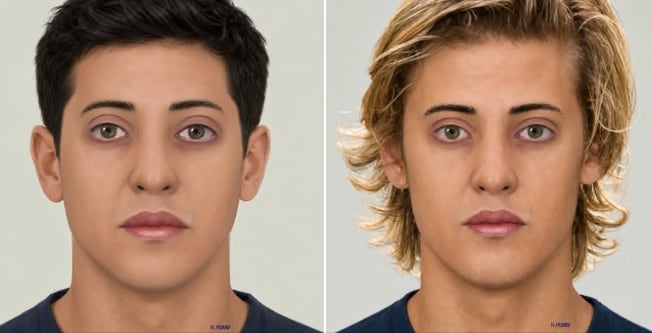
Scientists looking to find relatives based off DNA of partial skull found in Mountlake Terrace

Forensic genetic genealogists have processed the DNA of a partial skull found in a home that was sold in Mountlake Terrace in 2025.

Lean: Not rated Fact-focusedCountry: United States
Full coverage
Coverage breakdown
Funding
Not recorded100%
Countries
United States100%
Media ownership
KIRO-TV100%
Avg reliability-
Low-credibility share0%
Fact / opinion1/0
State media0%
More analysis
Truth score: 34 (Weakly supported) Propaganda risk: 0 Trending: Low Sources: 1 Reliability: Not rated Bias severity: 0 Risk: 0Sentiment: 0Sensationalism: 0 Amplification: 0

How we score

Like
Science
1 source

Who is covering this

NewsweekCenter
Truth score 40
Centre 100%100%
NewsweekCenter

Major Cancer Study Targets 75,000 Samples—What Scientists Hope to Find

Rare genetic variants missed by previous research could reveal new clues about who is most at risk of cancer.

Lean: Center Fact-focusedFactuality: Mostly factualCountry: United StatesFunding: PrivateOwner: Newsweek Media Group
Full coverage
Coverage breakdown
Funding
Private100%
Countries
United States100%
Media ownership
Newsweek Media Group100%
Avg reliability70
Low-credibility share0%
Fact / opinion1/0
State media0%
More analysis
Truth score: 40 (Limited corroboration) Propaganda risk: 0 Trending: Low Sources: 1 Reliability: 70 Bias severity: 0 Risk: 0Sentiment: 100Sensationalism: 0 Amplification: 0

How we score

Like
Left 67%67%Centre 33%33%
PBS NewsHourLeans left

Scientists are fighting for their halted funds. Trust of Black communities may be harder to win back

The study was among broader research into why Black Americans are twice as likely as their white peers to develop Alzheimer's, but the Trump administration abruptly halted it in its final stretch. Covered by 3 outlets: 2 lean left, 1 are centre.

Lean: Leans left Fact-focusedFactuality: Very highCountry: United StatesFunding: Public broadcasterOwner: PBS (Nonprofit)
Full coverage
Coverage breakdown
Funding
Corporate67%
Public broadcaster33%
Countries
United States67%
Canada33%
Media ownership
Independent33%
Walt Disney Company33%
PBS (Nonprofit)33%
Avg reliability78
Low-credibility share0%
Fact / opinion3/0
State media0%
More analysis
Truth score: 63 (Corroborated) Propaganda risk: 0 Trending: Low Sources: 3 Reliability: 78 Bias severity: 0 Risk: 0Sentiment: 100Sensationalism: 0 Amplification: 0

How we score

Like
Science
1 source

Who is covering this

PhysCenter
Truth score 38
Centre 100%100%
PhysCenter

Scientists build whole-Earth simulation to help find life on other planets

It's a dizzyingly busy time for scientists searching for life on distant planets. To date, astronomers have cataloged more than 6,000 planets beyond our solar system and are searching the atmospheres of the most promising worlds for...

Lean: Center Fact-focusedFactuality: Mostly factualCountry: United StatesFunding: CorporateOwner: Independent
Full coverage
Coverage breakdown
Funding
Corporate100%
Countries
United States100%
Media ownership
Independent100%
Avg reliability65
Low-credibility share0%
Fact / opinion1/0
State media0%
More analysis
Truth score: 38 (Weakly supported) Propaganda risk: 0 Trending: Low Sources: 1 Reliability: 65 Bias severity: 0 Risk: 0Sentiment: 0Sensationalism: 0 Amplification: 0

How we score

Like
Science
1 source

Who is covering this

ABC News (Australia)Center
Truth score 45
Centre 100%100%
ABC News (Australia)Center

The elusive desert frogs scientists want Central Australians to find

Some desert frogs can spend years underground, emerging only after rain. Now scientists are asking Central Australians to help track them down.

Lean: Center Fact-focusedFactuality: Very highCountry: AustraliaFunding: Public broadcasterOwner: Australian Government
Full coverage
Coverage breakdown
Funding
Public broadcaster100%
Countries
Australia100%
Media ownership
Australian Government100%
Avg reliability86
Low-credibility share0%
Fact / opinion1/0
State media0%
More analysis
Truth score: 45 (Limited corroboration) Propaganda risk: 0 Trending: Low Sources: 1 Reliability: 86 Bias severity: 0 Risk: 0Sentiment: 0Sensationalism: 0 Amplification: 0

How we score

Like
Technology
1 source

Who is covering this

WIREDLeans left
Truth score 42
Left 100%100%
WIREDLeans left

Are Memories Transferable? Meet the Scientists Replicating an Infamous Study to Find Out

In the 1960’s, an odd experiment showed planarian worms could transfer memories by consuming each other. It was a sensational finding—that is until the worms stopped learning.

Lean: Leans left Fact-focusedFactuality: HighCountry: United StatesFunding: CorporateOwner: Condé Nast
Full coverage
Coverage breakdown
Funding
Corporate100%
Countries
United States100%
Media ownership
Condé Nast100%
Avg reliability78
Low-credibility share0%
Fact / opinion1/0
State media0%
More analysis
Truth score: 42 (Limited corroboration) Propaganda risk: 0 Trending: Low Sources: 1 Reliability: 78 Bias severity: 0 Risk: 0Sentiment: 0Sensationalism: 0 Amplification: 0

How we score

Like
Centre 100%100%
euronews (English)Center

‘Zeptoverse’: CERN scientists uncover evidence of extraordinarily rare particle decay

Scientists at CERN have found evidence of an extraordinarily rare particle decay using the Large Hadron Collider. Physicists with the LHCb Collaboration at CERN’s Large Hadron Collider announced today evidence for an extremely rare...

Lean: Center Fact-focusedFactuality: HighCountry: FranceFunding: CorporateOwner: Alpac Capital
Full coverage
Coverage breakdown
Funding
Corporate100%
Countries
United States67%
France33%
Media ownership
Independent67%
Alpac Capital33%
Avg reliability72
Low-credibility share0%
Fact / opinion3/0
State media0%
More analysis
Truth score: 56 (Limited corroboration) Propaganda risk: 0 Trending: Low Sources: 3 Reliability: 72 Bias severity: 0 Risk: 0Sentiment: 0Sensationalism: 5 Amplification: 0

How we score

Like
Left 50%50%Centre 50%50%
CBS NewsLeans left

Scientist fired after 6-year-old girl dies in gene-editing trial

The girl died last year after receiving experimental gene therapy to correct a non-life-threatening condition, an investigation found.

Lean: Leans left Fact-focusedFactuality: HighCountry: United StatesFunding: CorporateOwner: Paramount Global
Full coverage
Coverage breakdown
Funding
Corporate100%
Countries
India50%
United States50%
Media ownership
Independent50%
Paramount Global50%
Avg reliability74
Low-credibility share0%
Fact / opinion2/0
State media0%
More analysis
Truth score: 56 (Limited corroboration) Propaganda risk: 0 Trending: Low Sources: 2 Reliability: 74 Bias severity: 0 Risk: 0Sentiment: -100Sensationalism: 0 Amplification: 0

How we score

Like