INDBInternet News Database 2.5 Updated 1 min ago · 467 sources Show or hide images Light or dark

Results for “James Webb Space”

Science
1 source
Truth score 34
Left 100%100%
Scottish News Herald ScotlandLeans left

Scottish astronomer who led UK contribution to James Webb Space Telescope retires

Professor Gillian Wright CBE, one of Scotland's most influential astronomers and space science leaders, is retiring after a distinguished career at the UK Astronomy Technology Centre (UK ATC) at the Royal Observatory Edinburgh.

Lean: Leans left Fact-focusedCountry: United KingdomFunding: CorporateOwner: Independent
Full coverage
Coverage breakdown
Funding
Corporate100%
Countries
United Kingdom100%
Media ownership
Independent100%
Avg reliability-
Low-credibility share0%
Fact / opinion1/0
State media0%
More analysis
Truth score: 34 (Weakly supported) Propaganda risk: 0 Trending: Low Sources: 1 Reliability: Not rated Bias severity: 0 Risk: 0Sentiment: 0Sensationalism: 0 Amplification: 0

How we score

Like
Science
2 sources

Who is covering this

LiveCenterNewsCenter
Truth score 50
Centre 100%100%
LiveCenter

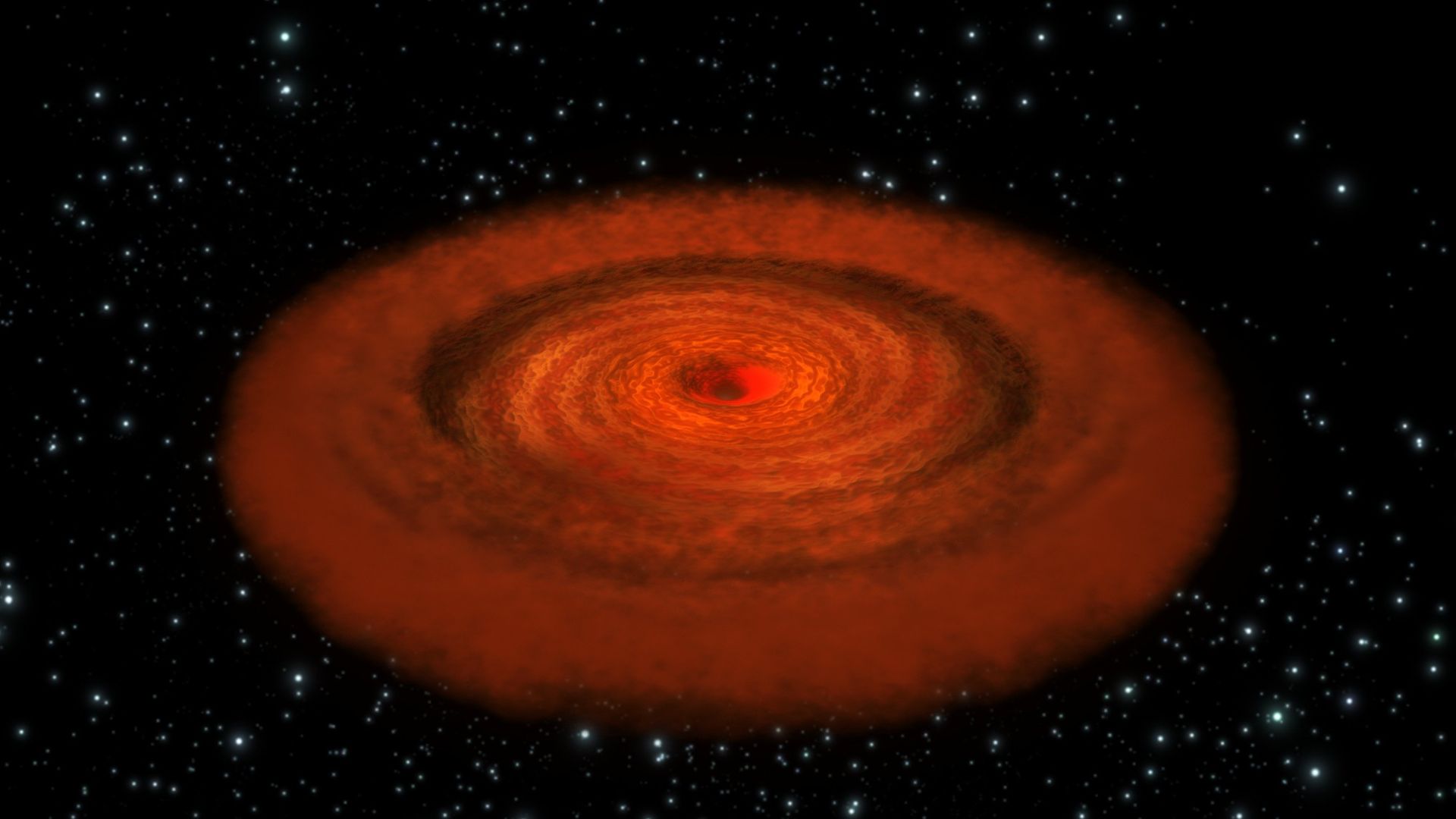
James Webb telescope discovers mysterious red object just 450 million years after the Big Bang — and it could be a baby black hole

The James Webb Space Telescope has spotted a tiny, extremely red object in the infant universe. It may be one of the earliest black holes, but they can't yet rule out a very different explanation.

Lean: Center Fact-focusedFactuality: HighCountry: United StatesFunding: CorporateOwner: Future US
Full coverage
Coverage breakdown
Funding
Corporate100%
Countries
United States50%
India50%
Media ownership
Future US50%
Independent50%
Avg reliability70
Low-credibility share0%
Fact / opinion2/0
State media0%
More analysis
Truth score: 50 (Limited corroboration) Propaganda risk: 0 Trending: Low Sources: 2 Reliability: 70 Bias severity: 0 Risk: 0Sentiment: 0Sensationalism: 0 Amplification: 0

How we score

Like
Science
1 source

Who is covering this

LiveCenter
Truth score 41
Centre 100%100%
LiveCenter

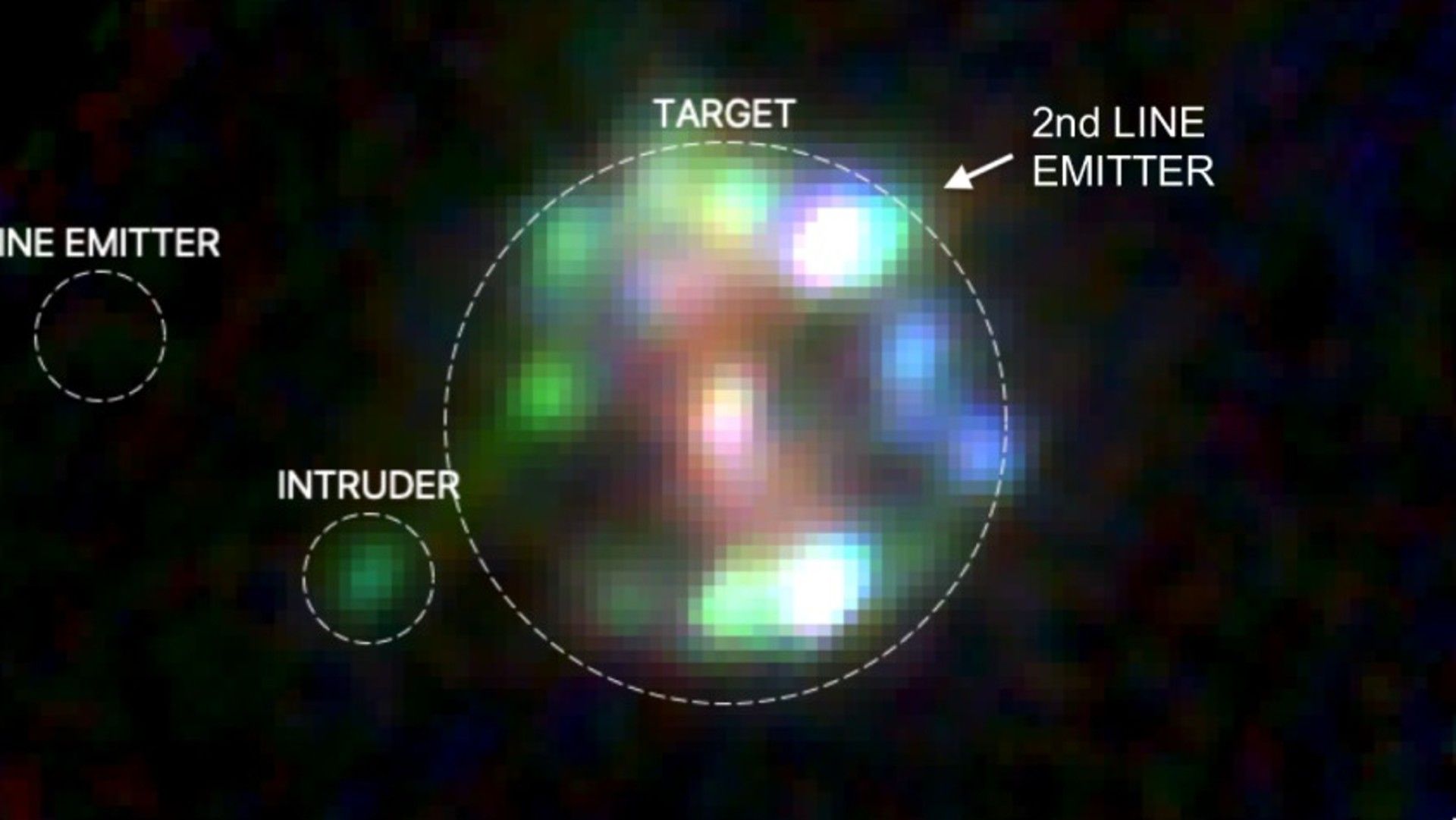
James Webb telescope discovers rare ring galaxy and 'intruder' 2 billion years after the Big Bang

Astronomers using the James Webb Space Telescope have observed a galaxy with a ring of newborn stars as it appeared 2.1 billion years after the Big Bang — hinting that the early universe may have been more chaotic than once thought.

Lean: Center Fact-focusedFactuality: HighCountry: United StatesFunding: CorporateOwner: Future US
Full coverage
Coverage breakdown
Funding
Corporate100%
Countries
United States100%
Media ownership
Future US100%
Avg reliability75
Low-credibility share0%
Fact / opinion1/0
State media0%
More analysis
Truth score: 41 (Limited corroboration) Propaganda risk: 0 Trending: Low Sources: 1 Reliability: 75 Bias severity: 0 Risk: 0Sentiment: 0Sensationalism: 0 Amplification: 0

How we score

Like
Science
1 source

Who is covering this

PhysCenter
Truth score 38
Centre 100%100%
PhysCenter

Webb's controversial 'little red dots' may finally have an explanation

Astronomers may have solved one of the biggest mysteries uncovered by NASA's James Webb Space Telescope (JWST), using sophisticated simulations to show that enigmatic objects known as "little red dots" (LRDs) are likely the birthplaces...

Lean: Center Fact-focusedFactuality: Mostly factualCountry: United StatesFunding: CorporateOwner: Independent
Full coverage
Coverage breakdown
Funding
Corporate100%
Countries
United States100%
Media ownership
Independent100%
Avg reliability65
Low-credibility share0%
Fact / opinion1/0
State media0%
More analysis
Truth score: 38 (Weakly supported) Propaganda risk: 0 Trending: Low Sources: 1 Reliability: 65 Bias severity: 0 Risk: 0Sentiment: 0Sensationalism: 0 Amplification: 0

How we score

Like
Science
3 sources

Who is covering this

NASACenterPhysCenterNewsCenter
Truth score 54
Centre 100%100%
NASACenter

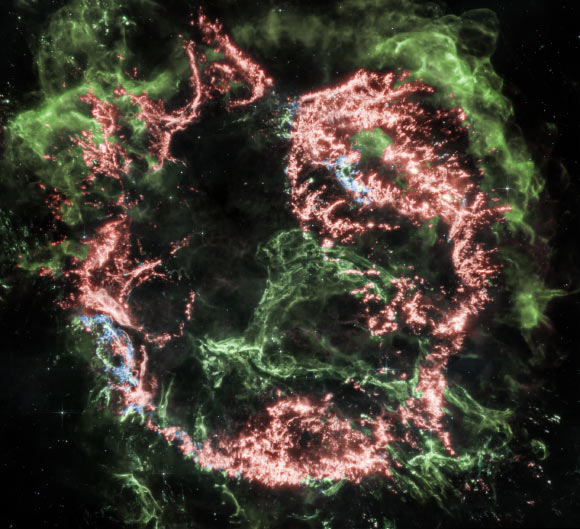
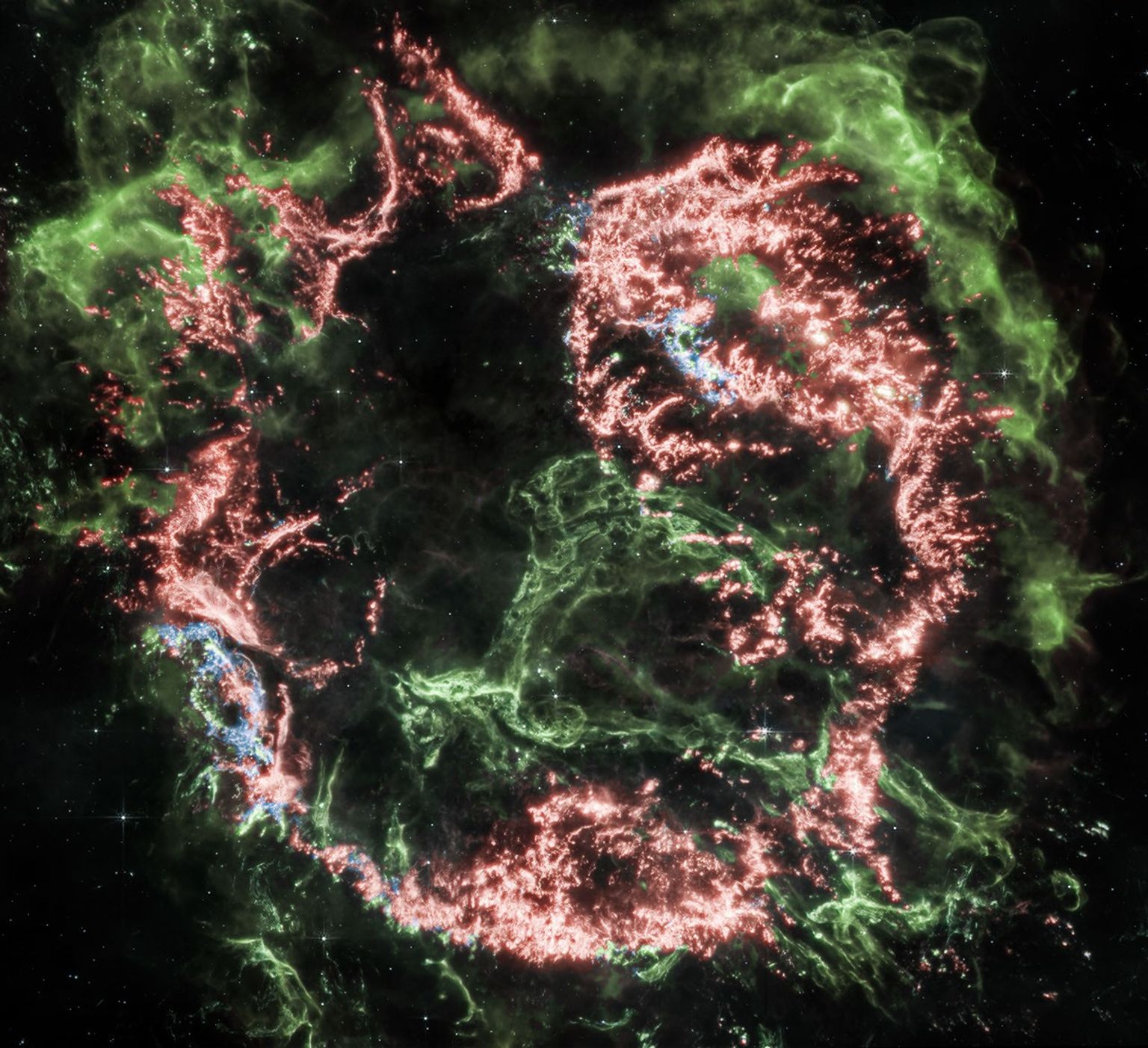
NASA’s Webb Shows How Supernova Dust Chronicles Star Evolution

NASA’s James Webb Space Telescope has painted a vibrant tapestry of the legendary supernova remnant Cassiopeia A (Cas A). NASA’s James Webb Space Telescope reveals the hot dust that makes up Cassiopeia A (Cas A) in this high-resolution,...

Lean: Center Fact-focusedFactuality: Mostly factualCountry: United StatesFunding: CorporateOwner: Independent
+ 1 · Full coverage
Coverage breakdown
Funding
Corporate100%
Countries
United States67%
India33%
Media ownership
Independent100%
Avg reliability65
Low-credibility share0%
Fact / opinion4/0
State media0%
More analysis
Truth score: 54 (Limited corroboration) Propaganda risk: 0 Trending: Low Sources: 3 Reliability: 65 Bias severity: 0 Risk: 0Sentiment: -25Sensationalism: 0 Amplification: 0

How we score

Like
No rated outlets yet
Breaking Science NewsNo political lean

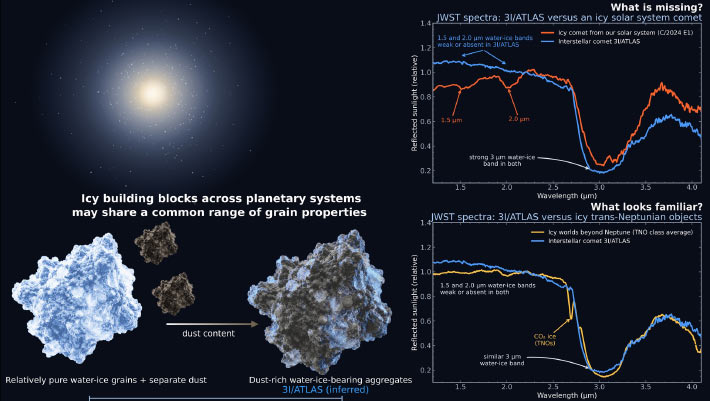
Webb Finds Dust-Rich Water Ice in Interstellar Comet 3I/ATLAS

Astronomers using the NASA/ESA/CSA James Webb Space Telescope have found that the water ice in the interstellar comet 3I/ATLAS is mixed with dark, rocky material in tiny grains.

Lean: No political lean Fact-focusedCountry: United StatesFunding: CorporateOwner: Independent
Full coverage
Coverage breakdown
Funding
Corporate100%
Countries
United States100%
Media ownership
Independent100%
Avg reliability-
Low-credibility share0%
Fact / opinion2/0
State media0%
More analysis
Truth score: 44 (Limited corroboration) Propaganda risk: 0 Trending: Low Sources: 2 Reliability: Not rated Bias severity: 0 Risk: 0Sentiment: 0Sensationalism: 8 Amplification: 0

How we score

Like
Science
1 source
Truth score 34
No rated outlets yet
Breaking Science NewsNo political lean

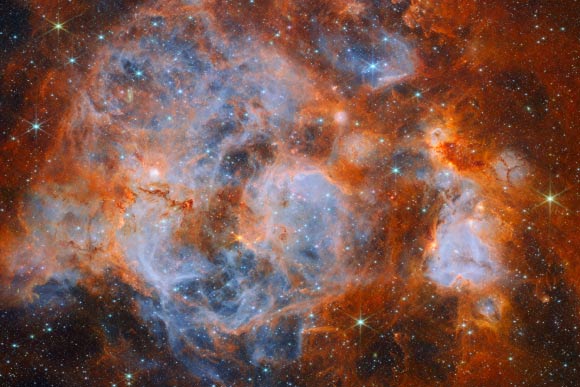
Webb Observes Turbulent Stellar Nursery

Astronomers using the NASA/ESA/CSA James Webb Space Telescope have captured a spectacular new view of N159, one of the richest HII complexes in the Large Magellanic Cloud.

Lean: No political lean Fact-focusedCountry: United StatesFunding: CorporateOwner: Independent
Full coverage
Coverage breakdown
Funding
Corporate100%
Countries
United States100%
Media ownership
Independent100%
Avg reliability-
Low-credibility share0%
Fact / opinion1/0
State media0%
More analysis
Truth score: 34 (Weakly supported) Propaganda risk: 0 Trending: Low Sources: 1 Reliability: Not rated Bias severity: 0 Risk: 0Sentiment: 0Sensationalism: 0 Amplification: 0

How we score

Like
Science
1 source
Truth score 34
No rated outlets yet
Breaking Science NewsNo political lean

Milky Way’s Central Black Hole is Surrounded by Metal-Rich Gas, Webb Reveals

The enrichment in metals (any element heavier than hydrogen and helium, including carbon, oxygen, iron and gold) likely came from generations of exploding stars, according to new observations from the NASA/ESA/CSA James Webb Space Telescope.

Lean: No political lean Fact-focusedCountry: United StatesFunding: CorporateOwner: Independent
Full coverage
Coverage breakdown
Funding
Corporate100%
Countries
United States100%
Media ownership
Independent100%
Avg reliability-
Low-credibility share0%
Fact / opinion1/0
State media0%
More analysis
Truth score: 34 (Weakly supported) Propaganda risk: 0 Trending: Low Sources: 1 Reliability: Not rated Bias severity: 0 Risk: 0Sentiment: 0Sensationalism: 0 Amplification: 0
How we score

Like
Centre 100%100%
LiveCenter

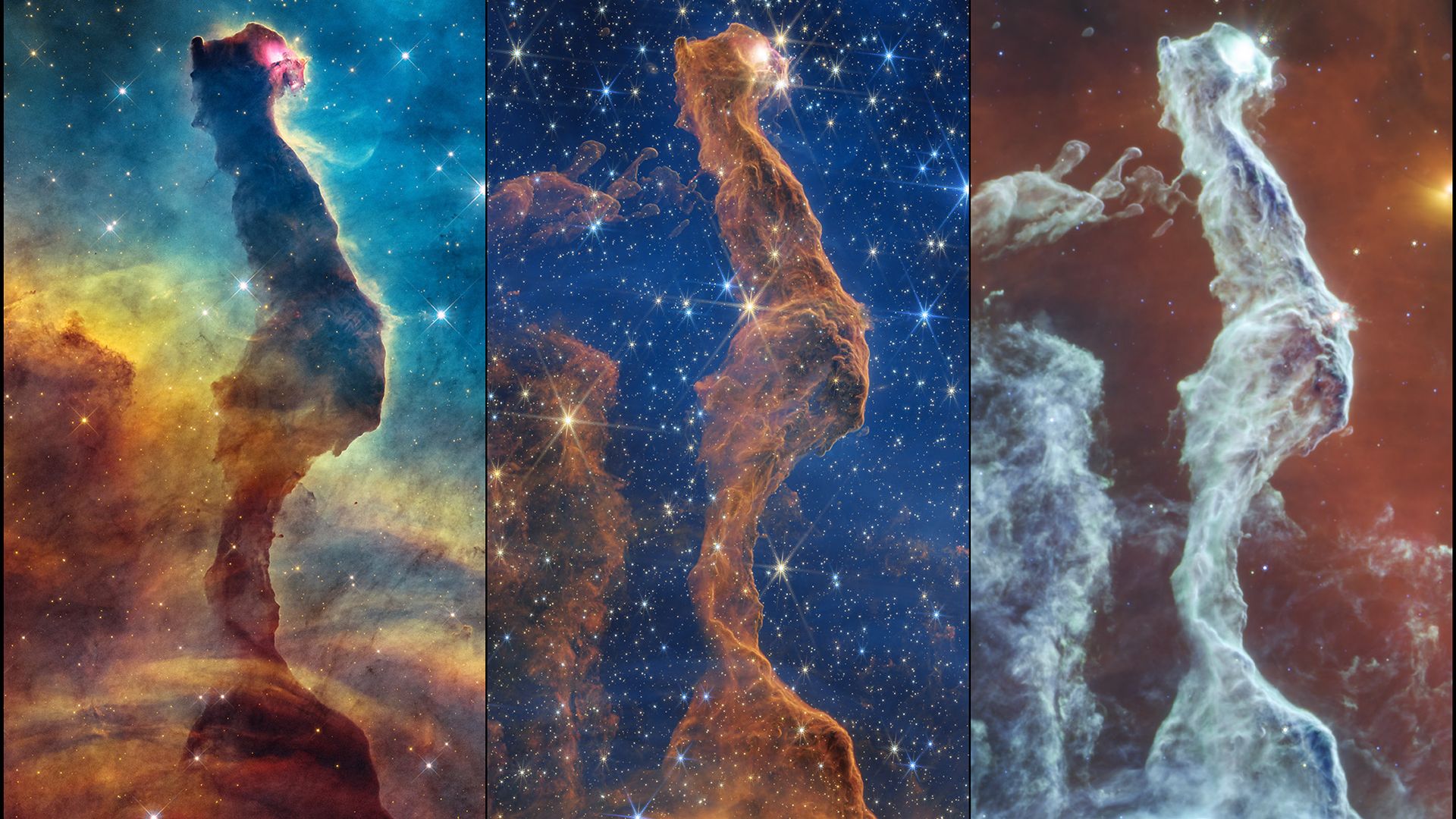
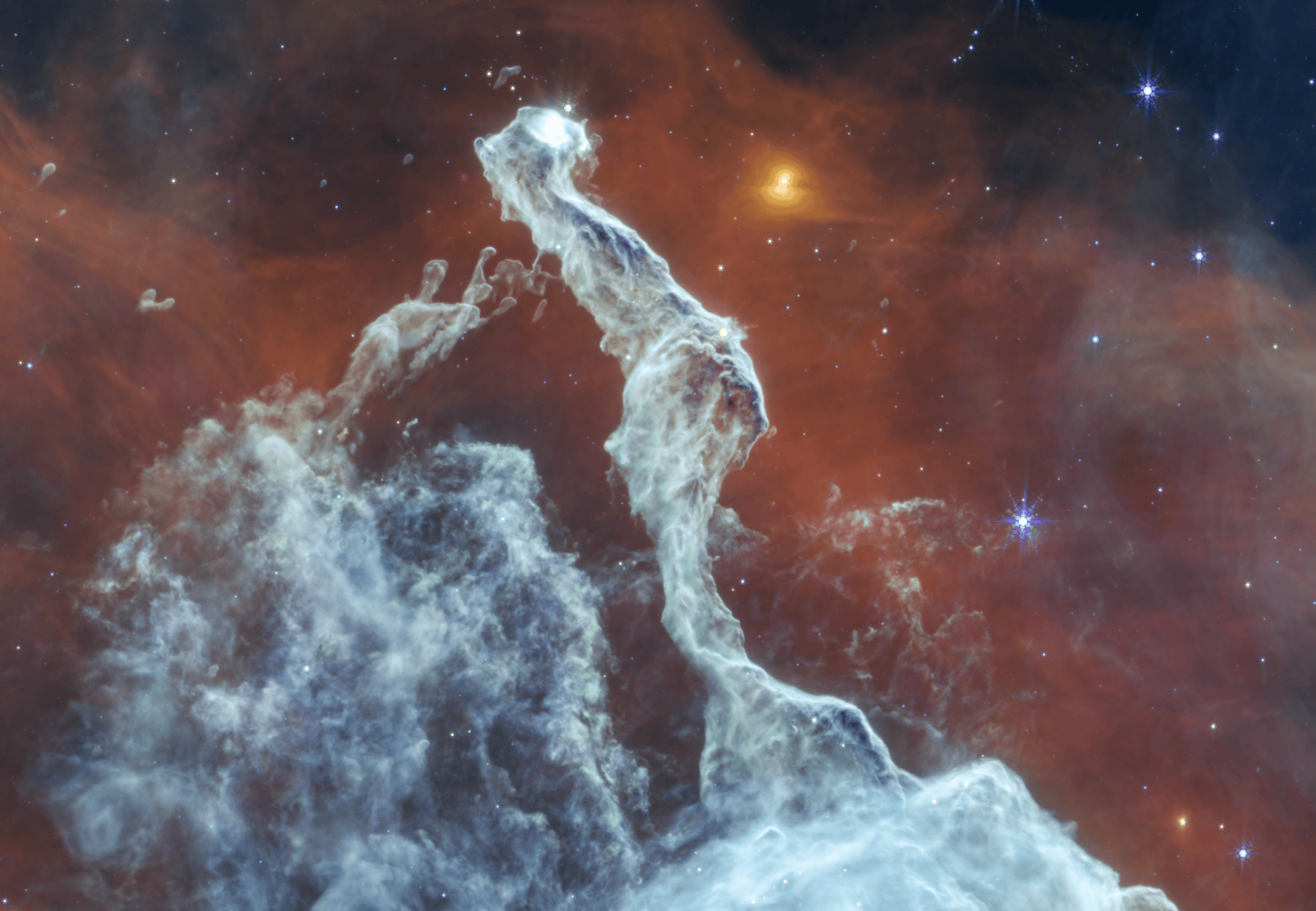
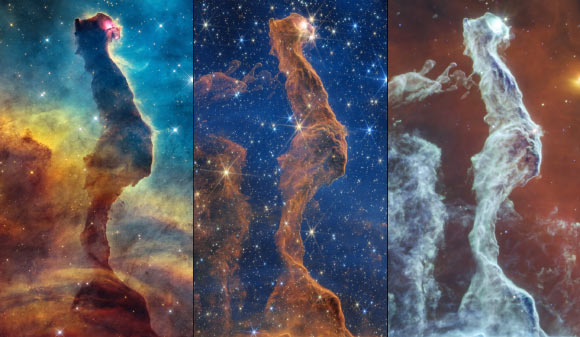
Hubble and Webb spot something ghostly happening in the Cat's Head Nebula

The Cat's Head Nebula shows its ghostly insides and sinister red eye in rival views from the Hubble and James Webb space telescopes. Like a spectral form rising out of a cold mist, NASA’s Hubble and James Webb Space Telescopes have...

Lean: Center Fact-focusedFactuality: HighCountry: United StatesFunding: CorporateOwner: Future US
+ 1 · Full coverage
Coverage breakdown
Funding
Corporate100%
Countries
United States60%
Canada20%
India20%
Media ownership
Independent60%
Future US20%
Corus Entertainment20%
Avg reliability69
Low-credibility share0%
Fact / opinion6/0
State media0%
More analysis
Truth score: 62 (Corroborated) Propaganda risk: 0 Trending: Low Sources: 5 Reliability: 69 Bias severity: 0 Risk: 0Sentiment: 0Sensationalism: 0 Amplification: 0

How we score

Like
Centre 100%100%
Breaking Science NewsNo political lean

Hubble and Webb Telescopes Zoom in on Cat’s Head Nebula

The NASA/ESA Hubble Space Telescope and the NASA/ESA/CSA James Webb Space Telescope have turned their cameras on an eerie pillar of gas and dust with a glowing red ‘eye,’ probably a young star still wrapped in its cocoon.

Lean: No political lean Fact-focusedCountry: United StatesFunding: CorporateOwner: Independent
+ 1 · Full coverage
Coverage breakdown
Funding
Corporate100%
Countries
India50%
United States50%
Media ownership
Independent100%
Avg reliability65
Low-credibility share0%
Fact / opinion3/0
State media0%
More analysis
Truth score: 48 (Limited corroboration) Propaganda risk: 0 Trending: Low Sources: 2 Reliability: 65 Bias severity: 0 Risk: 0Sentiment: 0Sensationalism: 5 Amplification: 0

How we score

Like
Science
1 source

Who is covering this

PhysCenter
Truth score 38
Centre 100%100%
PhysCenter

JWST studies a tiny, metal-poor galaxy with just a fraction of the sun's oxygen abundance

Astronomers using the James Webb Space Telescope (JWST) have studied one of the most metal-poor galaxies known. Seen as it was around 12.2 billion years ago, LAP2 is a tiny system with a stellar mass comparable to that of a massive star...

Lean: Center Fact-focusedFactuality: Mostly factualCountry: United StatesFunding: CorporateOwner: Independent
Full coverage
Coverage breakdown
Funding
Corporate100%
Countries
United States100%
Media ownership
Independent100%
Avg reliability65
Low-credibility share0%
Fact / opinion1/0
State media0%
More analysis
Truth score: 38 (Weakly supported) Propaganda risk: 0 Trending: Low Sources: 1 Reliability: 65 Bias severity: 0 Risk: 0Sentiment: 0Sensationalism: 8 Amplification: 0

How we score

Like
Science
1 source

Who is covering this

PhysCenter
Truth score 38
Centre 100%100%
PhysCenter

Stellar pulses reveal hidden binary in JWST calibration star sample

Stars used to calibrate the James Webb Space Telescope (JWST) must have precisely characterized spectra so that their fluxes can be measured accurately. Yet some stars that appear single may in fact harbor unresolved companions that...

Lean: Center Fact-focusedFactuality: Mostly factualCountry: United StatesFunding: CorporateOwner: Independent
Full coverage
Coverage breakdown
Funding
Corporate100%
Countries
United States100%
Media ownership
Independent100%
Avg reliability65
Low-credibility share0%
Fact / opinion1/0
State media0%
More analysis
Truth score: 38 (Weakly supported) Propaganda risk: 0 Trending: Low Sources: 1 Reliability: 65 Bias severity: 0 Risk: 0Sentiment: 0Sensationalism: 8 Amplification: 0

How we score

Like
Science
1 source

Who is covering this

PhysCenter
Truth score 38
Centre 100%100%
PhysCenter

A cosmic magnifying glass could reveal the same supernova two more times in roughly 70 years

Thanks to the gravitational lensing caused by a massive galaxy cluster and high-resolution images from the James Webb Space Telescope (JWST), astronomers discovered an exploding star when the universe was 4.9 billion years old. The...

Lean: Center Fact-focusedFactuality: Mostly factualCountry: United StatesFunding: CorporateOwner: Independent
Full coverage
Coverage breakdown
Funding
Corporate100%
Countries
United States100%
Media ownership
Independent100%
Avg reliability65
Low-credibility share0%
Fact / opinion1/0
State media0%
More analysis
Truth score: 38 (Weakly supported) Propaganda risk: 0 Trending: Low Sources: 1 Reliability: 65 Bias severity: 0 Risk: 0Sentiment: 0Sensationalism: 0 Amplification: 0

How we score

Like
Science
1 source

Who is covering this

PhysCenter
Truth score 38
Centre 100%100%
PhysCenter

JWST tracks more than 100 magnified stellar events in the Dragon galaxy

Using the James Webb Space Telescope (JWST), a team of astronomers identified 104 magnified stellar events in a galaxy known as the Dragon, located around 6.5 billion light-years away. This discovery more than doubles the previous...

Lean: Center Fact-focusedFactuality: Mostly factualCountry: United StatesFunding: CorporateOwner: Independent
Full coverage
Coverage breakdown
Funding
Corporate100%
Countries
United States100%
Media ownership
Independent100%
Avg reliability65
Low-credibility share0%
Fact / opinion1/0
State media0%
More analysis
Truth score: 38 (Weakly supported) Propaganda risk: 0 Trending: Low Sources: 1 Reliability: 65 Bias severity: 0 Risk: 0Sentiment: 0Sensationalism: 8 Amplification: 0

How we score

Like
Science
1 source

Who is covering this

PhysCenter
Truth score 38
Centre 100%100%
PhysCenter

A cosmic 'leaf blower': Light-propelled winds help explain early universe's bright galaxies

When astronomers looked at photos of the early universe taken by the James Webb Space Telescope, they found something odd: an overabundance of bright galaxies. Based on what they knew about the early universe, such galaxies should have...

Lean: Center Fact-focusedFactuality: Mostly factualCountry: United StatesFunding: CorporateOwner: Independent
Full coverage
Coverage breakdown
Funding
Corporate100%
Countries
United States100%
Media ownership
Independent100%
Avg reliability65
Low-credibility share0%
Fact / opinion1/0
State media0%
More analysis
Truth score: 38 (Weakly supported) Propaganda risk: 0 Trending: Low Sources: 1 Reliability: 65 Bias severity: 0 Risk: 0Sentiment: 0Sensationalism: 0 Amplification: 0

How we score

Like
Science
1 source

Who is covering this

PhysCenter
Truth score 38
Centre 100%100%
PhysCenter

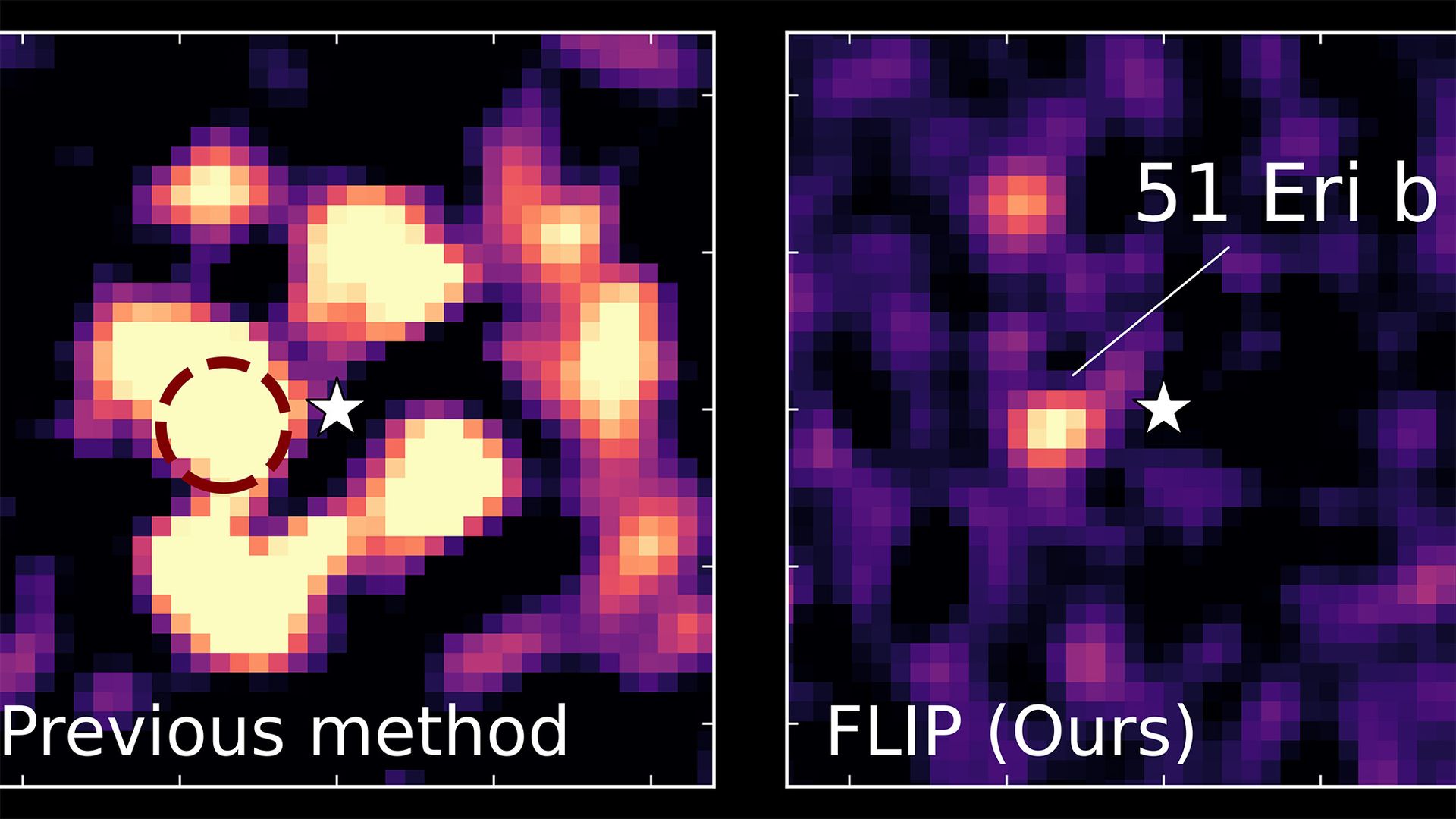
Giant planet emerges from two-year-old JWST data thanks to glare-removal technique

Even the world's most powerful telescopes have their blind spots. Although NASA's James Webb Space Telescope (JWST) can peer billions of years into the past, it still struggles to photograph planets orbiting nearby stars. Stars shine...

Lean: Center Fact-focusedFactuality: Mostly factualCountry: United StatesFunding: CorporateOwner: Independent
Full coverage
Coverage breakdown
Funding
Corporate100%
Countries
United States100%
Media ownership
Independent100%
Avg reliability65
Low-credibility share0%
Fact / opinion1/0
State media0%
More analysis
Truth score: 38 (Weakly supported) Propaganda risk: 0 Trending: Low Sources: 1 Reliability: 65 Bias severity: 0 Risk: 0Sentiment: 0Sensationalism: 8 Amplification: 0

How we score

Like
Science
1 source

Who is covering this

PhysCenter
Truth score 38
Centre 100%100%
PhysCenter

A tiny shift exposes a cold brown dwarf masquerading as an early galaxy

A faint red object spotted by the James Webb Space Telescope originally appeared to offer a possible glimpse of the universe's first galaxies. But images taken about 3½ years apart revealed a giveaway: The object, nicknamed Capotauro, had moved.

Lean: Center Fact-focusedFactuality: Mostly factualCountry: United StatesFunding: CorporateOwner: Independent
Full coverage
Coverage breakdown
Funding
Corporate100%
Countries
United States100%
Media ownership
Independent100%
Avg reliability65
Low-credibility share0%
Fact / opinion1/0
State media0%
More analysis
Truth score: 38 (Weakly supported) Propaganda risk: 0 Trending: Low Sources: 1 Reliability: 65 Bias severity: 0 Risk: 0Sentiment: 0Sensationalism: 0 Amplification: 0

How we score

Like
Science
1 source

Who is covering this

PhysCenter
Truth score 38
Centre 100%100%
PhysCenter

Leviathan's sprawling stars challenge idea that dusty giants become compact galaxies

Astronomers using the James Webb Space Telescope (JWST) have confirmed a massive, dust-rich galaxy called Leviathan in the early universe. Seen when the universe was roughly 1.5 billion years old, the galaxy has its stars spread out...

Lean: Center Fact-focusedFactuality: Mostly factualCountry: United StatesFunding: CorporateOwner: Independent
Full coverage
Coverage breakdown
Funding
Corporate100%
Countries
United States100%
Media ownership
Independent100%
Avg reliability65
Low-credibility share0%
Fact / opinion1/0
State media0%
More analysis
Truth score: 38 (Weakly supported) Propaganda risk: 0 Trending: Low Sources: 1 Reliability: 65 Bias severity: 0 Risk: 0Sentiment: 0Sensationalism: 0 Amplification: 0

How we score

Like
Science
1 source

Who is covering this

PhysCenter
Truth score 38
Centre 100%100%
PhysCenter

JWST reveals a distant galaxy that may let most of its ionizing radiation escape

Astronomers using the James Webb Space Telescope (JWST) have found evidence that a distant, exceptionally blue galaxy may allow most of its ionizing radiation to escape into space. Known as EBG-1, the gravitationally lensed galaxy is...

Lean: Center Fact-focusedFactuality: Mostly factualCountry: United StatesFunding: CorporateOwner: Independent
Full coverage
Coverage breakdown
Funding
Corporate100%
Countries
United States100%
Media ownership
Independent100%
Avg reliability65
Low-credibility share0%
Fact / opinion1/0
State media0%
More analysis
Truth score: 38 (Weakly supported) Propaganda risk: 0 Trending: Low Sources: 1 Reliability: 65 Bias severity: 0 Risk: 0Sentiment: 0Sensationalism: 8 Amplification: 0

How we score

Like
Centre 100%100%
ReutersCenter

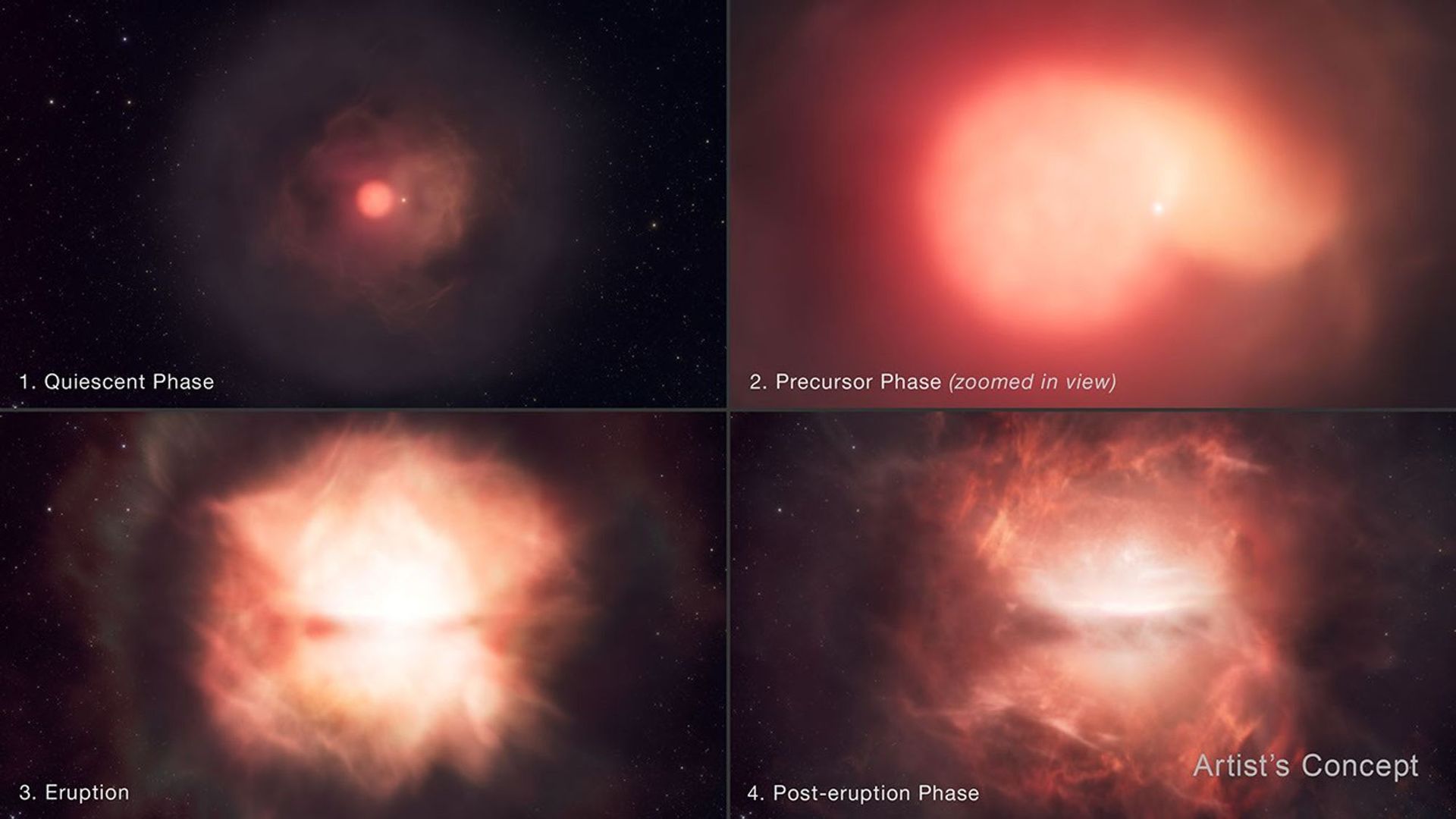
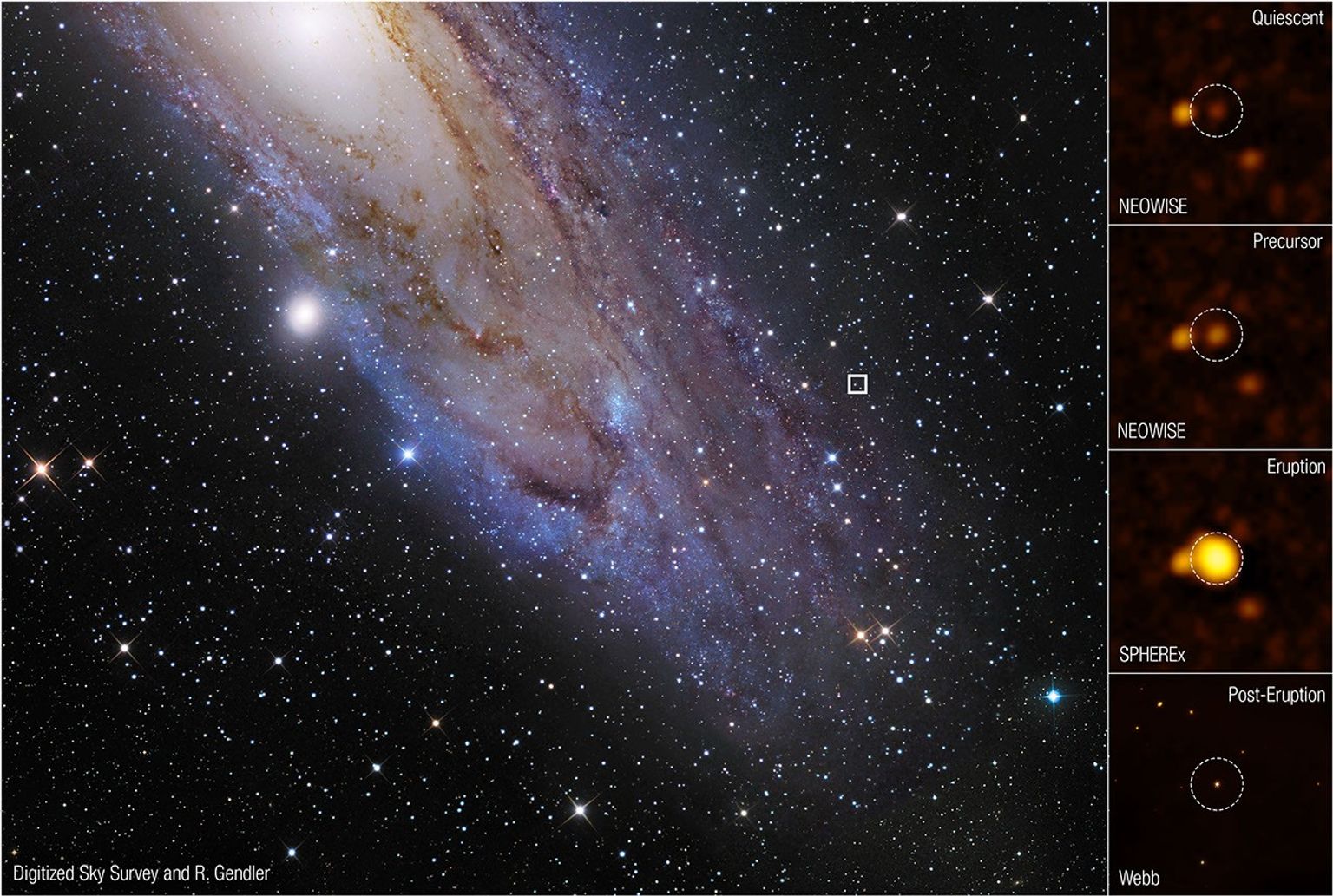
Astronomers observe a huge puffy star merge with smaller companion

Astronomers using the James Webb Space Telescope followed up on years-old observations to confirm the first recorded act of a giant star swallowing its companion. Astronomers witnessed a giant star swallow its smaller companion,...

Lean: Center Fact-focusedFactuality: Very highCountry: United KingdomFunding: CorporateOwner: Thomson Reuters
+ 6 · Full coverage
Coverage breakdown
Funding
Corporate80%
Private20%
Countries
United States60%
India20%
United Kingdom20%
Media ownership
Google News20%
Independent20%
Newsweek Media Group20%
Thomson Reuters20%
Future US20%
Avg reliability75
Low-credibility share0%
Fact / opinion11/0
State media0%
More analysis
Truth score: 65 (Corroborated) Propaganda risk: 0 Trending: Low Sources: 5 Reliability: 75 Bias severity: 0 Risk: 0Sentiment: 0Sensationalism: 5 Amplification: 0

How we score

Like
Science
3 sources
Truth score 56
Centre 100%100%
The EconomistCenter

Astronomers are mystified by little red dots in the sky

So far, observations by instruments including the James Webb Space Telescope have revealed the presence of surprisingly massive black holes in the early universe. Covered by 3 outlets: 3 are centre.

Lean: Center Fact-focusedFactuality: Very highCountry: United KingdomFunding: PrivateOwner: Economist Group
  • Phys Webb Space Telescope's little red dots could hold key to first black holes

    Johns Hopkins researchers searching the expanse of the universe for the existence of the first black holes are zeroing in on little red dots that may hold the key to the theoretical phenomenon.

    Lean: Center Fact-focusedFactuality: Mostly factualCountry: United StatesFunding: CorporateOwner: Independent
  • News Astronomers are mystified by little red dots in the sky - The Economist

    Astronomers are mystified by little red dots in the sky The Economist Webb Space Telescope's little red dots could hold key to first black holes Johns Hopkins University Could primordial black holes hold the key to...

    Lean: Center Fact-focusedFactuality: Mostly factualCountry: IndiaFunding: CorporateOwner: Independent
+ 1 · Full coverage
Coverage breakdown
Funding
Corporate67%
Private33%
Countries
United States33%
United Kingdom33%
India33%
Media ownership
Independent67%
Economist Group33%
Avg reliability73
Low-credibility share0%
Fact / opinion4/0
State media0%
More analysis
Truth score: 56 (Limited corroboration) Propaganda risk: 0 Trending: Low Sources: 3 Reliability: 73 Bias severity: 0 Risk: 0Sentiment: 0Sensationalism: 0 Amplification: 0

How we score

Like
Centre 100%100%
NASACenter

NASA Data Clinches First-of-Its-Kind Stellar Merger

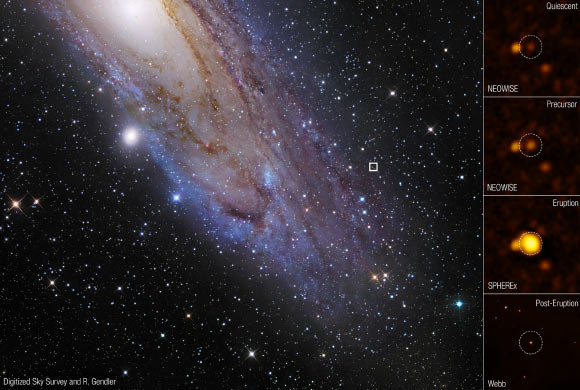
Researchers recently identified a first of its kind: A star slightly less massive than the Sun spiraled into and merged with a puffy supergiant star at the outskirts of our neighboring Andromeda galaxy. Astronomers have watched a star...

Lean: Center Fact-focusedFactuality: Mostly factualCountry: United StatesFunding: CorporateOwner: Independent
Full coverage
Coverage breakdown
Funding
Corporate100%
Countries
United States100%
Media ownership
Independent100%
Avg reliability65
Low-credibility share0%
Fact / opinion3/0
State media0%
More analysis
Truth score: 54 (Limited corroboration) Propaganda risk: 0 Trending: Low Sources: 3 Reliability: 65 Bias severity: 0 Risk: 0Sentiment: 0Sensationalism: 0 Amplification: 0

How we score

Like
Science
1 source

Who is covering this

PhysCenter
Truth score 38
Centre 100%100%
PhysCenter

Dirty ice around young star Beta Pictoris suggests frequent collisions and sheds light on the system's formation

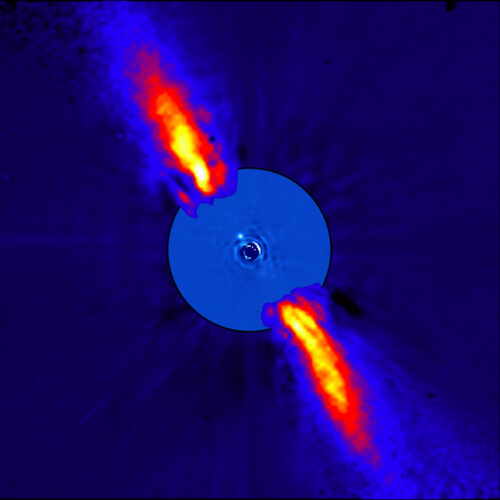
In a recent study of infrared light collected by the James Webb Space Telescope (JWST), a group of astronomers detected ice for the first time around the young star Beta Pictoris. Researchers had expected ice around Beta Pictoris, but...

Lean: Center Fact-focusedFactuality: Mostly factualCountry: United StatesFunding: CorporateOwner: Independent
Full coverage
Coverage breakdown
Funding
Corporate100%
Countries
United States100%
Media ownership
Independent100%
Avg reliability65
Low-credibility share0%
Fact / opinion1/0
State media0%
More analysis
Truth score: 38 (Weakly supported) Propaganda risk: 0 Trending: Low Sources: 1 Reliability: 65 Bias severity: 0 Risk: 0Sentiment: 0Sensationalism: 0 Amplification: 0

How we score

Like
Science
1 source
Truth score 34
No rated outlets yet
Breaking Science NewsNo political lean

Lava World TOI-561b May Have Reflective, Cloudy Atmosphere

TOI-561b, a rocky exoplanet so close to its parent star that its year lasts just over 10 hours, may be wrapped in a thick, reflective atmosphere, according to a new analysis of data gathered by the NASA/ESA/CSA James Webb Space Telescope.

Lean: No political lean Fact-focusedCountry: United StatesFunding: CorporateOwner: Independent
Full coverage
Coverage breakdown
Funding
Corporate100%
Countries
United States100%
Media ownership
Independent100%
Avg reliability-
Low-credibility share0%
Fact / opinion1/0
State media0%
More analysis
Truth score: 34 (Weakly supported) Propaganda risk: 0 Trending: Low Sources: 1 Reliability: Not rated Bias severity: 0 Risk: 0Sentiment: 0Sensationalism: 0 Amplification: 0
How we score

Like
Science
1 source
Truth score 34
No rated outlets yet
Breaking Science NewsNo political lean

Dust ‘Fingerprints’ in Cassiopeia A Hint at Original Star’s Pre-Explosion Shake-Up

Using the Mid-Infrared Instrument (MIRI) aboard the NASA/ESA/CSA James Webb Space Telescope, astronomers have isolated dust emission from individual clumps of debris in Cassiopeia A, the youngest known supernova remnant in our Milky Way Galaxy.

Lean: No political lean Fact-focusedCountry: United StatesFunding: CorporateOwner: Independent
Full coverage
Coverage breakdown
Funding
Corporate100%
Countries
United States100%
Media ownership
Independent100%
Avg reliability-
Low-credibility share0%
Fact / opinion1/0
State media0%
More analysis
Truth score: 34 (Weakly supported) Propaganda risk: 0 Trending: Low Sources: 1 Reliability: Not rated Bias severity: 0 Risk: 0Sentiment: 0Sensationalism: 0 Amplification: 0

How we score

Like
Science
1 source

Who is covering this

LiveCenter
Truth score 41
Centre 100%100%
LiveCenter

James Webb and Euclid telescopes discover record-breaking black hole at the edge of the universe

Scientists have discovered the earliest-known quasar lurking in the ancient universe — and it's growing at a slower rate than scientists believed possible.

Lean: Center Fact-focusedFactuality: HighCountry: United StatesFunding: CorporateOwner: Future US
Full coverage
Coverage breakdown
Funding
Corporate100%
Countries
United States100%
Media ownership
Future US100%
Avg reliability75
Low-credibility share0%
Fact / opinion1/0
State media0%
More analysis
Truth score: 41 (Limited corroboration) Propaganda risk: 0 Trending: Low Sources: 1 Reliability: 75 Bias severity: 0 Risk: 0Sentiment: 0Sensationalism: 0 Amplification: 0

How we score

Like
Science
1 source

Who is covering this

Ars TechnicaLeans left
Truth score 43
Left 100%100%
Ars TechnicaLeans left

James Webb telescope finds ice older than the star it orbits

Radiation and collisions reshape the planetary building materials.

Lean: Leans left Fact-focusedFactuality: HighCountry: United StatesFunding: CorporateOwner: Condé Nast
Full coverage
Coverage breakdown
Funding
Corporate100%
Countries
United States100%
Media ownership
Condé Nast100%
Avg reliability80
Low-credibility share0%
Fact / opinion1/0
State media0%
More analysis
Truth score: 43 (Limited corroboration) Propaganda risk: 0 Trending: Low Sources: 1 Reliability: 80 Bias severity: 0 Risk: 0Sentiment: 0Sensationalism: 0 Amplification: 0

How we score

Like
Science
1 source

Who is covering this

LiveCenter
Truth score 41
Centre 100%100%
LiveCenter

Scientists removed the glare from a James Webb telescope image — and unmasked a hidden planet

Using machine learning, astronomers developed a new way of looking at James Webb telescope data that allows far-off planets to emerge from their star's glare.

Lean: Center Fact-focusedFactuality: HighCountry: United StatesFunding: CorporateOwner: Future US
Full coverage
Coverage breakdown
Funding
Corporate100%
Countries
United States100%
Media ownership
Future US100%
Avg reliability75
Low-credibility share0%
Fact / opinion1/0
State media0%
More analysis
Truth score: 41 (Limited corroboration) Propaganda risk: 0 Trending: Low Sources: 1 Reliability: 75 Bias severity: 0 Risk: 0Sentiment: 0Sensationalism: 0 Amplification: 0
How we score

Like
Left 31%31%Centre 50%50%Right 19%19%
The New York TimesLeft

James Gunn and Peter Safran Are Out as Heads of DC Studios

Skydance, which acquired DC Studios’ parent company weeks ago, announced that the duo would step away from their roles after four years. In another major shake-up for the DC Studios, Skydance is replacing Hollywood director James Gunn...

Lean: Left Fact-focusedFactuality: Very highCountry: United StatesFunding: PrivateOwner: NY Times Company
+ 101 · Full coverage
Coverage breakdown
Funding
Corporate77%
Private14%
Not recorded7%
Public broadcaster2%
Countries
United States67%
Canada9%
United Kingdom9%
India9%
Israel2%
Media ownership
Independent45%
Penske Media Corporation14%
G/O Media7%
Vox Media7%
Google News3%
Avg reliability69
Low-credibility share3%
Fact / opinion106/0
State media0%
More analysis
Truth score: 89 (Strongly corroborated) Propaganda risk: 2 Trending: Low Sources: 43 Reliability: 69 Bias severity: 25 Risk: 3Sentiment: 4Sensationalism: 1 Amplification: 0

How we score

Like
Left 39%39%Centre 56%56%Right 6%6%
ABC News (US)Leans left

LeBron James sues makers of AI sports-betting app, saying they used his likeness

LeBron James moved past Hall of Fame point guard Jason Kidd for third on the NBA's career assists list with 12,092. PHILADELPHIA (AP) — LeBron James had 11 assists and moved into third on the NBA’s career list, and he added 15 points...

Lean: Leans left Fact-focusedFactuality: HighCountry: United StatesFunding: CorporateOwner: Walt Disney Company
+ 50 · Full coverage
Coverage breakdown
Funding
Corporate64%
Not recorded20%
Private12%
State-funded4%
Countries
United States76%
United Kingdom12%
Canada4%
Qatar4%
Taiwan4%
Media ownership
Independent25%
Walt Disney Company12%
Newsweek Media Group6%
Apollo Global Management6%
Gannett6%
Avg reliability72
Low-credibility share0%
Fact / opinion55/0
State media4%
More analysis
Truth score: 90 (Strongly corroborated) Propaganda risk: 0 Trending: Low Sources: 25 Reliability: 72 Bias severity: 75 Risk: 0Sentiment: 11Sensationalism: 2 Amplification: 0

How we score

Like